
Best Plaque Materials for Indoor and Outdoor Recognition
11/09/2026Choosing the best plaque materials depends on more than appearance. A plaque displayed inside an office, school or clubroom has very different requirements from one installed outdoors and exposed to rain, moisture, sunlight and changing temperatures.
The right choice also depends on what the plaque is being used for. A corporate recognition award may suit a completely different material from a long-term outdoor memorial or a sporting club recognition plaque.
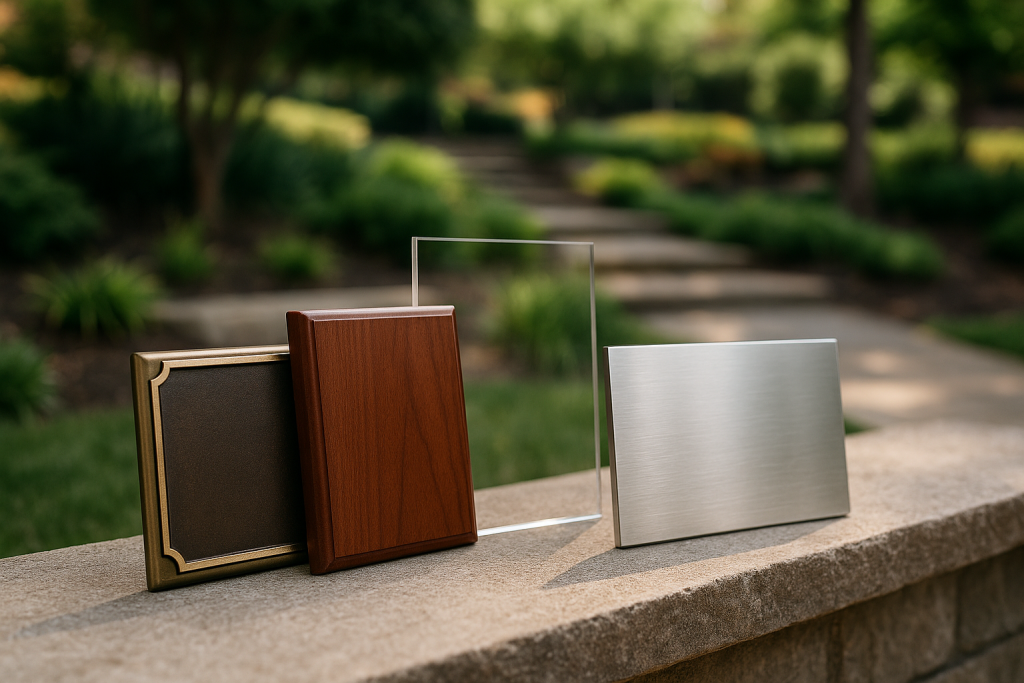
Common options include wood, acrylic, glass, brass, aluminium and stainless steel. Each has its own appearance and practical considerations.
This guide explains what to consider when selecting plaque materials so you can choose an option that suits the purpose, location and style of your recognition or commemorative plaque.
What are the best plaque materials?
There is no single material that is best for every plaque.
For indoor recognition, materials such as wood, glass and acrylic can provide attractive presentation options, while brass, aluminium and stainless steel can provide a more traditional or contemporary metal appearance.
For outdoor recognition, metal options may be worth considering where the plaque needs to suit an exposed environment. However, the exact material, finish, mounting method and location should be assessed together rather than choosing a material based on its name alone.
The most important questions are:
- Where will the plaque be installed?
- Will it be exposed to weather or direct sunlight?
- How much text needs to be included?
- What type of engraving is required?
- Is the plaque primarily commemorative, decorative or functional?
- How formal or contemporary should it look?
- How will it be mounted?
Answering these questions first makes the material decision much easier.
Indoor plaque materials
Indoor plaques generally give you more flexibility because they are protected from direct weather exposure.
This makes it possible to prioritise appearance, colour, texture, engraving style and how the plaque complements the surrounding environment.
Wooden plaques
Wooden plaques have a traditional, warm appearance and can work particularly well for sporting clubs, schools, community organisations and achievement awards.
Wood can create a strong connection with traditional presentation awards and long-standing club recognition.
It can also provide a suitable background for engraved plates or other personalised elements.
For an indoor display, consider where the plaque will be mounted and how its finish will work with the surrounding décor.
Acrylic plaques
Acrylic offers a modern alternative for recognition awards.
Its contemporary appearance can work well for corporate recognition, school achievements, professional awards and modern sporting presentations.
Acrylic can also be useful when a lighter, more contemporary visual style is preferred over traditional timber or metal.
When choosing acrylic, consider the shape, thickness, colour and engraving or printing method available for the particular product.
Glass plaques
Glass is often chosen when the presentation needs to feel clean, professional and contemporary.
A glass award can be particularly appropriate for:
- Employee recognition
- Corporate achievements
- Professional milestones
- School awards
- Community recognition
- Special commemorative presentations
Glass engraving and etching can create a subtle, sophisticated appearance. West Ryde Trophies & Awards provides glass and acrylic engraving as part of its engraving services.
You can explore the business’s engraving services when considering how your chosen plaque could be personalised.
Metal plaque materials
Metal provides another broad range of possibilities, particularly where a formal, durable-looking finish is wanted.
Brass plaques
Brass has a classic appearance and can be particularly suitable for traditional recognition, commemorative applications and formal displays.
Its warm metallic appearance can work well with engraved lettering and borders.
Brass can be worth considering where the visual character of the material is an important part of the design.
Aluminium plaques
Aluminium offers a lighter metal option and can suit a range of engraved and personalised applications.
It can provide a clean, practical appearance and may be suitable for different types of recognition, identification or commemorative use depending on the product and intended environment.
As with any metal plaque, consider the desired finish and engraving method rather than choosing solely on material.
Stainless steel plaques
Stainless steel can provide a contemporary metallic appearance and is an option worth considering when a modern, clean finish is required.
It can work particularly well for corporate environments, contemporary memorials and recognition displays.
The suitability of a particular stainless-steel plaque for outdoor use will depend on the specific product, finish, installation and exposure conditions.
Outdoor recognition plaques
Outdoor plaques require more careful consideration because the environment can affect both the plaque and its presentation over time.
A plaque installed on an exterior wall, memorial structure or sporting facility may experience:
- Rain and moisture
- Direct sunlight
- UV exposure
- Temperature changes
- Dust and dirt
- Physical contact
- Different mounting conditions
This does not automatically mean that one material is suitable for every outdoor application.
Instead, consider the complete installation.
Location matters
A plaque installed beneath a covered entrance is exposed to very different conditions from one mounted on a freestanding structure in an open area.
Before choosing the material, consider whether the plaque will be:
- Fully exposed
- Partially sheltered
- Mounted under an awning
- Installed against a building
- Attached to stone, brick, timber or another surface
- Located in a garden or landscaped area
These details can help determine what type of plaque and mounting solution should be considered.
Readability matters outdoors
Outdoor recognition plaques should also be easy to read.
A design that looks excellent when viewed close-up may not work as well if visitors need to stand several metres away.
Consider:
- Letter size
- Font style
- Contrast
- Amount of text
- Plaque size
- Viewing distance
- Lighting conditions
Keeping the wording concise can make a significant difference.
Choosing materials for different types of recognition
The purpose of the plaque can help narrow the options.
Employee and corporate recognition
For employee recognition, retirement, long service and corporate achievements, glass, acrylic and metal plaques can all provide appropriate presentation styles.
The choice can depend on whether the organisation wants something modern, traditional or understated.
A corporate logo can also help connect the award to the organisation.
Sporting clubs
Sporting clubs often have a long history of recognising players, coaches, volunteers and committee members.
Wooden plaques can suit traditional club environments, while acrylic, glass and metal can provide more contemporary alternatives.
For a club memorial or permanent recognition display, consider how the plaque will fit into the club’s existing environment.
Schools
Schools may use plaques to recognise staff, students, significant achievements, benefactors or important milestones.
A plaque intended for an indoor school display can prioritise presentation and readability, while an exterior commemorative plaque may require greater consideration of weather exposure and mounting.
Memorial and commemorative plaques
Memorial plaques require particular care because the material and design become part of how the person or event is remembered.
For an outdoor memorial, consider the location, exposure, readability and long-term maintenance requirements.
For an indoor memorial, there may be greater flexibility in selecting glass, acrylic, wood or metal based on the surrounding environment.
Community recognition
Community groups and organisations may use plaques to acknowledge volunteers, contributors, donors, milestones or significant local achievements.
The most appropriate material will depend on whether the plaque is intended as a permanent outdoor marker, an indoor display or part of a presentation.
Engraving and plaque materials
The engraving method is another important part of the decision.
Different materials can require different techniques and produce different visual results.
West Ryde Trophies & Awards provides engraving services including laser engraving, glass and acrylic engraving, glass sand blasting, stainless-steel engraving, metal etching and brass engraving, as well as restoration and polishing services.
That means the material and personalisation method can be considered together rather than separately.
For example, if you already know that you want a glass plaque with a particular engraved design, it makes sense to discuss the engraving requirements before finalising the plaque.
You can view the engraving services available from West Ryde Trophies & Awards for more information.
How to choose the right plaque material
A simple decision process can help.
Step 1: Decide where it will go
Start with the location rather than the material.
Is it going inside an office, school, clubhouse or reception area? Or will it be installed outside?
Step 2: Consider exposure
If it is outdoors, think about rain, sunlight, moisture, temperature changes and physical exposure.
Step 3: Decide how it should look
Would a traditional wooden or brass appearance suit the occasion? Or would glass, acrylic or stainless steel provide a better contemporary appearance?
Step 4: Determine the wording
Work out the exact information before finalising the plaque size.
This might include:
- Recipient’s name
- Organisation name
- Achievement
- Years of service
- Important dates
- Commemorative message
- Logo
- Event or presentation details
Step 5: Consider the viewing distance
A small plaque with detailed wording may be suitable on an office wall but less effective in an open public area.
Step 6: Discuss engraving
Ask which engraving or etching process is appropriate for the selected material and design.
Step 7: Check installation requirements
Consider how the plaque will be attached and what surface it will be installed on.
Common mistakes when choosing plaque materials
Choosing based only on appearance
A plaque may look perfect in a product photograph but still be unsuitable for its intended environment.
Using too much text
More words do not necessarily create a better memorial or recognition plaque. Concise wording is often easier to read and more visually balanced.
Ignoring the environment
An indoor and outdoor plaque should not automatically be treated as the same project.
Forgetting the engraving
The material and engraving technique work together. Confirm that the desired personalisation is appropriate for the selected plaque.
Selecting the wrong size
Think about where the plaque will be installed and how far away people will normally stand when reading it.
Where to browse plaque options
West Ryde Trophies & Awards has an extensive catalogue covering plaques, shields, trophies, medals, cups, glass awards, acrylic and resin awards and other recognition products.
The Plaques & Shields collection is a useful starting point when comparing styles for recognition, achievement and commemorative purposes.
For customers who are still deciding between a plaque and another form of award, the broader online shop provides access to the wider catalogue.
The business has operated since 1976 and has a physical showroom in West Ryde, Sydney, which can be particularly useful for local customers who want to discuss their requirements and compare options.
Final thoughts
The best plaque materials are the ones that suit the purpose, environment and design rather than simply being the most expensive or most durable option available.
For indoor recognition, appearance, readability and personalisation may be the biggest considerations. For outdoor memorials and commemorative plaques, exposure, installation, material suitability and long-term readability deserve greater attention.
Whether you are recognising an employee, celebrating a sporting club contribution, commemorating an important milestone or creating a memorial, start with the location and purpose before choosing the material.
West Ryde Trophies & Awards can help customers compare plaque and engraving options across its range. Explore the Plaques & Shields collection or contact the team if you need assistance with a personalised plaque or engraving requirement.
Frequently Asked Questions
What is the best material for an indoor recognition plaque?
There is no universal answer. Glass, acrylic, wood and metal can all work well indoors depending on the desired appearance, wording, engraving method and setting.
What is the best material for an outdoor plaque?
The appropriate material depends on the specific outdoor environment, exposure, finish, mounting method and intended lifespan. It is best to discuss the installation conditions before selecting a particular plaque.
Are glass plaques suitable for recognition awards?
Yes. Glass plaques can provide a clean and contemporary presentation and may suit corporate, school, professional and community recognition.
Are wooden plaques suitable for sporting clubs?
Wood can be a strong choice for indoor sporting-club recognition, particularly where a traditional or warm appearance is preferred. The specific product and finish should be considered alongside the intended location.
Can plaques be personalised with logos and engraving?
Personalisation options depend on the selected plaque and engraving method. West Ryde Trophies & Awards offers several engraving techniques, including laser engraving, glass and acrylic engraving, brass engraving and stainless-steel engraving.